


5-Axis Milling and CNC Milling Technology for Complex Plastic Components
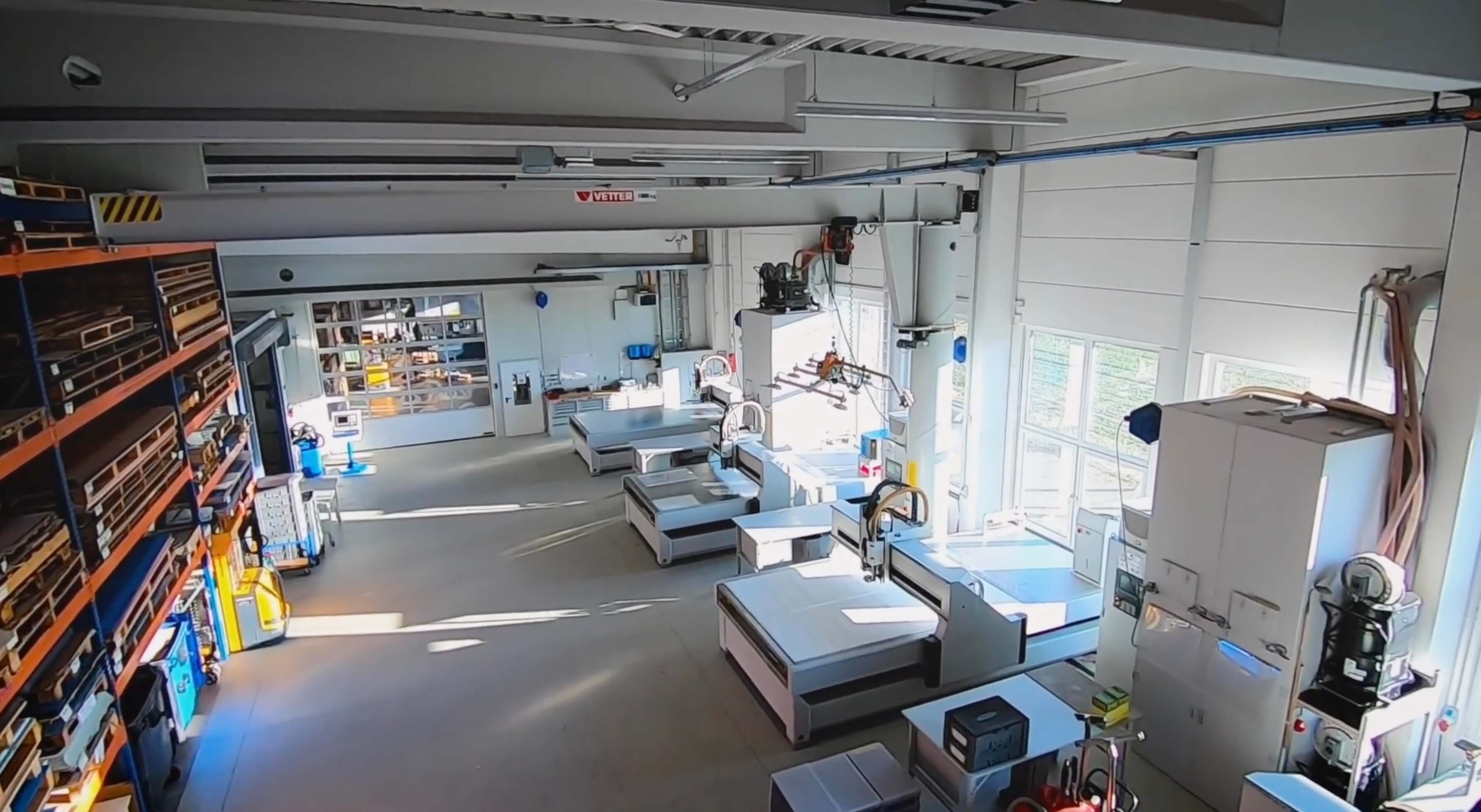
J. Schwarz operates modern CNC milling machines for the precision manufacturing of plastic components. Our machinery includes four gantry milling centres for large-format parts and a 5-axis gantry milling centre for complex, bulky workpieces.
This allows us to manufacture both relatively simple contours using 3-axis milling and demanding components using 5-axis machining. The CNC machining method is selected according to the geometry, material, dimensions, required tolerances and desired surface quality.
CNC Milling of Plastics to Component Requirements
CNC milling precisely machines workpieces using digital manufacturing data. Modern CNC milling machines offer excellent repeatability and can produce a wide range of contours and component shapes.
Machining offers considerable flexibility, particularly for engineering plastics. Depending on the workpiece, holes, cut-outs, pockets, contours and surfaces at different levels can be produced within a coordinated manufacturing process.
J. Schwarz consistently tailors CNC machining to the requirements of each component. The priority is to select the technically suitable and cost-effective solution for the specific part, rather than simply using as many axes as possible.
3-Axis or 5-Axis Milling – Which Technology Suits Which Component?
Not every plastic component requires 5-axis machining. For flat or geometrically less complex parts, 3-axis milling can be the more cost-effective solution. In this CNC milling process, movement takes place along the X, Y and Z axes. This allows many technical plastic parts to be manufactured precisely and efficiently.
As components become more complex in three dimensions, additional axes come into play. In addition to the X, Y and Z axes, 5-axis milling provides two rotary axes. These five axes allow access to different sides of a workpiece without having to reposition the component for every machining step.
The machines selected for a project therefore depend on factors such as the workpiece shape, the plastic used, the dimensions, the required tolerances and the desired surface finish.

Advantages of 5-Axis Machining for Complex Plastic Parts
5-axis machining expands the capabilities of CNC manufacturing, particularly for components with demanding three-dimensional geometries. Movement across five axes provides access to surfaces, contours and hard-to-reach areas that would require multiple setups with a conventional machining strategy.
A key advantage of 5-axis milling is therefore the reduction in workpiece repositioning. Milling several sides of a workpiece in a single setup reduces potential positioning errors and helps maintain tight tolerances.
5-axis machining also allows the tool orientation to be better adapted to the component surface. Depending on the application, shorter, more rigid tools can offer additional advantages in precision, surface quality and process reliability.
For customers, this means that even demanding plastic parts can be manufactured to a high standard with reproducible results.
Simultaneous 5-Axis Machining for Demanding Contours
Simultaneous 5-axis machining can be used for particularly complex workpieces. Several of the five axes are controlled at the same time, allowing the tool to maintain a suitable angle to the surface during milling.
Simultaneous 5-axis machining is particularly suitable for complex contours, freeform surfaces and hard-to-reach areas. Coordinated axis movements allow demanding shapes to be produced while potentially reducing the number of setups required.
Another advantage of simultaneous 5-axis machining is the precise positioning of different surfaces relative to one another. Fewer setups can reduce repositioning errors, supporting both the precision and quality of the finished parts.
5-Axis Milling Machines for Large and Complex Components
5-axis milling machines combine linear movement along the X, Y and Z axes with additional rotary axes. This allows the tool to reach different areas of a workpiece and produce complex shapes using five axes.
J. Schwarz uses a 5-axis gantry milling centre for this purpose. The machine has an integrated position monitoring system and 700 mm of Z-axis travel, allowing bulky 3D-milled parts to be machined.
Technical Specifications of the 5-Axis Milling Centre:
- Gantry design for bulky components
- Integrated position monitoring system
- 700 mm Z-axis travel
- Maximum component size: 1,000 × 2,000 × 700 mm
J. Schwarz combines the capabilities of modern 5-axis milling machines with exceptionally large machining dimensions for technical plastic components.
Large-Format Milling on Four Gantry Milling Centres
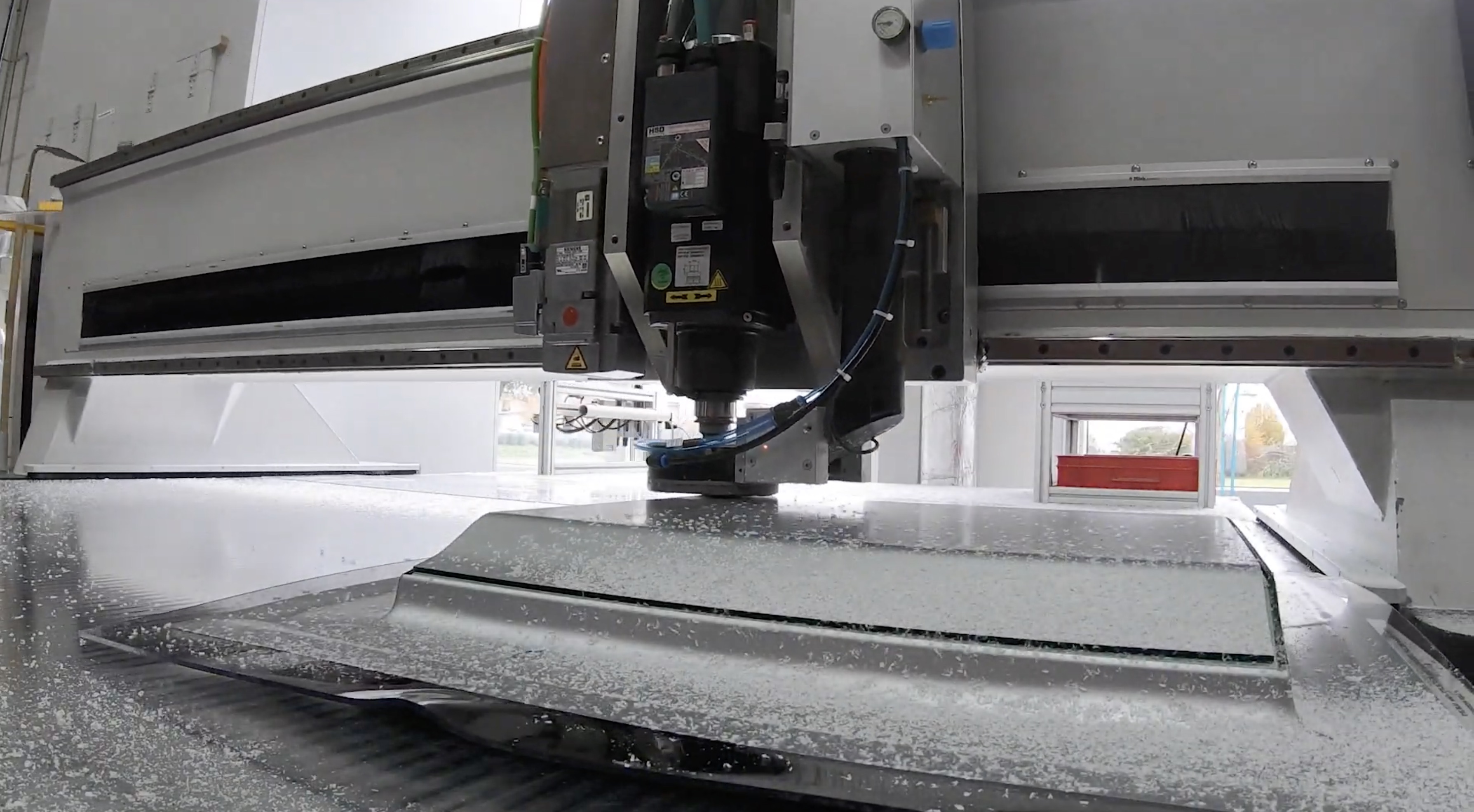
In addition to 5-axis machining, J. Schwarz operates four gantry milling centres for manufacturing large-format plastic parts. The milling tables measure up to 3,000 × 2,000 mm.
This allows large sheets, components and contours to be machined under CNC control. The gantry design provides a large working area and is particularly suitable for workpieces whose dimensions would exceed the capacity of conventional CNC machines.
Features of the Gantry Milling Centres Include:
- Milling tables up to 3,000 × 2,000 mm
- Camera recognition
- High feed rates
- Optimised edge quality
- Patented vacuum management to hold the workpiece securely
Securely holding the material is particularly important in large-format milling. The vacuum management system reliably holds workpieces on the milling table during machining, supporting precision manufacturing.
High-Precision CNC Machining of Plastics
Milling plastics places different demands on machinery, tooling and process parameters than machining metals. Material properties, heat generation, tool selection and feed rates must be coordinated to produce clean edges, precise dimensions and high-quality surfaces.
Experience in CNC machining different plastics is therefore an important factor in the quality of the finished parts. J. Schwarz combines modern CNC milling machines with manufacturing processes tailored to each material.
Different tools and parameters can be selected depending on the plastic, component shape and application. This enables the production of individual parts, prototypes and repeat components.
From CAD Data to a CNC-Milled Part
Digital design data or a CAD file can provide the starting point for manufacturing complex CNC parts. This data is used to prepare the required programs and machining steps for the CNC machines.
Programming takes more than the workpiece contour into account. Material, tooling, accessibility, required axes, setups and surface requirements are also considered during planning.
For complex components, 5-axis milling can reduce the number of setups required. For simpler parts, 3-axis milling may be the more efficient choice. The appropriate manufacturing process is therefore always selected according to the specific requirements.
When Does 5-Axis Milling Offer Advantages?
5-axis milling is particularly suitable when a workpiece has complex three-dimensional shapes or several sides need to be accessible within a single manufacturing process. The additional axes significantly expand the range of movement available to the tool and workpiece.
Typical Advantages of 5-Axis Machining Include:
- Complex components: Demanding three-dimensional contours and hard-to-reach areas can be machined.
- Fewer setups: Several sides of a workpiece can be accessed within a coordinated process.
- High precision: Less repositioning reduces potential positioning errors.
- Good surface finishes: The tool angle can be better adapted to the component surface.
- Efficient manufacturing: Fewer setup operations can reduce machining times for complex parts.
- Large components: The J. Schwarz 5-axis gantry milling centre accommodates workpieces up to 1,000 × 2,000 × 700 mm.
The advantages of this technology must always be assessed in relation to the specific component. For simpler parts, 3-axis machining is often entirely sufficient and more cost-effective.
CNC Milling Machines as Part of Flexible Manufacturing
The machinery at J. Schwarz allows us to select CNC milling machines to suit each task. Four large-format gantry milling centres and a 5-axis milling centre accommodate different component sizes and levels of complexity.
This allows us to manufacture both large two-dimensional plastic parts and workpieces with complex three-dimensional geometries using five axes. Customers benefit from a broad range of solutions for CNC machining of plastics.
The starting point is the desired component: its dimensions, material, function, tolerances, quantity and quality requirements determine the appropriate CNC machining method.
Which Milling Technology Suits Your Plastic Component?
Whether 3-axis milling, 5-axis milling or simultaneous 5-axis machining is the right solution depends on the specific requirements of the component. Size, shape, material, accessibility of individual surfaces and required precision determine the manufacturing strategy.
J. Schwarz operates CNC milling machines for large-format plastic parts as well as 5-axis milling equipment for complex workpieces. This allows manufacturing to be tailored to each project, rather than adapting the component to the capabilities of a single machine.
Do you have CAD data, a drawing or specific requirements for your component? Contact us. We will assess which manufacturing solution meets the technical and economic requirements of your project.